

Key takeaways
- Ephemeral retail responds to consumers’ desire for novelty, originality, and experience in a context where the standardization of retail has diminished the element of surprise.
- Pop-up stores enable brands to build an omnichannel strategy by connecting online and offline, strengthening their physical presence while relying on e-commerce.
- They serve as a highly effective testing tool — for markets, locations, concepts, or target audiences — allowing brands to analyze performance data and refine decisions before scaling up.
- The ephemeral format reduces financial risk by eliminating the need for long and costly leases, and provides a flexible way to boost activity during peak periods (Christmas, holidays…).
- Pop-up stores refresh the customer experience through immersive brand universes, activations, collaborations, and events, creating connection, proximity, and a sense of exclusivity.
- They act as a powerful communication and engagement lever: product launches (Coca-Cola, Chanel), playful branded worlds (Danette, 1664), immersive experiences (IKEA, Kellogg’s).
- Pop-up stores help brands strengthen their community, attract new customers, generate media visibility, and enhance brand image through memorable experiences.
The emergence of ephemeral commerce is finding its place at the crossroads of the real estate market and the search for experience from consumers. In recent decades, physical retail has seen a unification of the in-store customer experience. Whether you are in Paris, New York or London, they are the same brands with the same merchandising. Thus, the consumer is in need of surprise and discovery. Faced with the growing demand from consumers looking for originality and the constant desire to be surprised, brands must be creative to meet this need and thefleeting lends itself very well to the game.
The success of the ephemeral format is also explained by the reduced financial burden And the limitation of financial risk What does an own store represent. Thanks to e-commerce, the physical store is effectively no longer the only source of income for a brand. However, as stated above, physical trade is still a interesting sales channel When setting up a omnichannel strategy. Combine the Digital and the physical In his strategy thus allows consumers to navigate the universe of their favorite brands not only through their online universe, but also during events such as pop up stores.
What are the advantages of a pop-up store?
A real marketing tool of the 21st century, how can we explain the meteoric success of the pop-up store?
1. The pop-up store, a test and learn tool
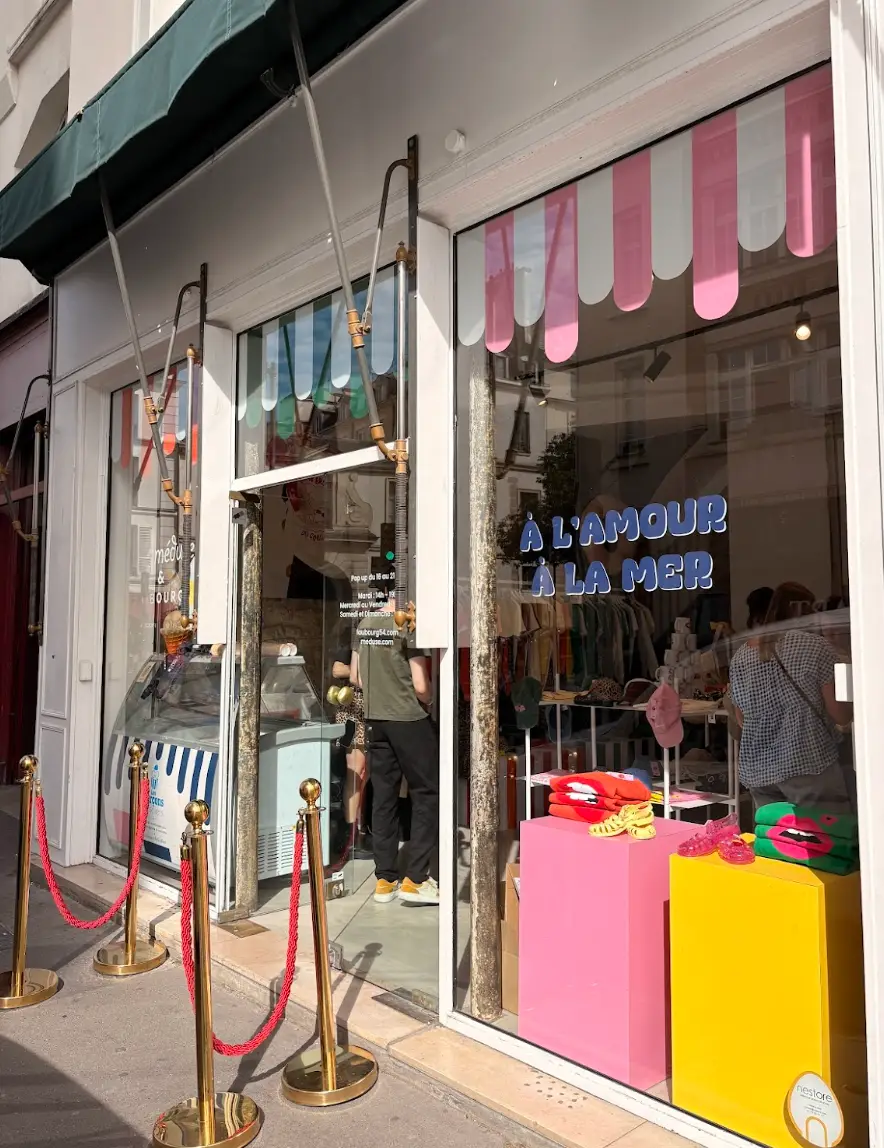
According to Nestore, the pop-up store is used as a laboratory. We see pop-up stores as a way to test new concepts, test a market, a location, a target... before deploying it on a large scale. During this test it is important to collect performance data and to analyze them for measuring the impact from the store on brand development and find ways of improvement.
Contact with the customer is clearly your best ally in order to better understand your target and their expectations. It is therefore very important to go directly to the store to meet your customers and get feedback.
2. Ephemeral retail reduces financial risk
By opting for a temporary format, brands avoid committing to long and often costly commercial leases. Compared to a traditional store, a pop-up significantly lowers financial exposure. It offers an agile way to test a transition into physical retail before potentially taking the leap into a permanent location. It can also serve as a strategic boost during peak periods such as Christmas or other high-traffic seasons.
3. The pop-up store reinvents the customer experience
Opening a pop-up store brings a brand — and its products — to life. Through thoughtful staging, events or collaborations, it becomes the ideal opportunity to highlight a brand’s purpose and express its identity. With customizable merchandising concepts, customers feel valued and engaged, which strengthens loyalty.
A pop-up store creates a sense of proximity and exclusivity precisely because it is temporary. Its short lifespan encourages consumers to visit quickly, fostering a direct and memorable connection between the brand and its audience. Today’s customers constantly seek new experiences, and brands can meet that demand through events, talks, mini-games, DIY workshops and more. This makes the pop-up store a powerful communication tool that generates curiosity among customers, prospects — and even the media.
I FIND MY POP UP STORE
Illustrations: Why create a pop-up store?
Launching a new product or expanding a range? A pop-up store can serve as a strong communication campaign and help introduce your product to the market. This is exactly what Coca-Cola did for the launch of its FuzTea drink. Chanel also embraced the ephemeral format to unveil its “Coco Crush” beauty collection.
Many brands turn to pop-ups to create real-life experiences for their audience. Danette, for example, built a playful universe entirely around its iconic dessert pot, offering visitors fun and immersive activities. For the arrival of summer, beer brand 1664 designed a relaxing, innovative pop-up concept, allowing customers to enjoy a “chill” moment by privatizing an actual hotel.
A pop-up can also be the perfect way to interact with your community, build closeness and spark dialogue. IKEA did just that by creating a temporary cinema furnished entirely with its own products and letting visitors choose the film. Kellogg’s Extra launched a cereal-creation workshop where consumers could invent their own recipe — with the winning one later produced and sold the following quarter.
1. Pop-up stores as a tool to promote an offer
What better way to introduce a new product than with a dedicated temporary space entirely designed around it? Brands like Coca-Cola and Chanel understood this potential and used pop-ups as a communication channel to promote new launches and collections.
Coca-Cola’s Fuze Tea Pop-Up Store
To promote its new low-calorie iced tea, Fuze Tea, Coca-Cola created a one-week pop-up store built around the theme of “disconnection.” Visitors enjoyed free iced tea in a relaxed setting designed in the drink’s signature green and yellow colors.
The layout focused on relaxation zones: rocking chairs, a swing photobooth, a “disconnect” quotation wall, and an area where guests could enjoy their drink while listening to music blindfolded. Everything was designed to encourage a friendly, sensory experience while discovering the new beverage.


Chanel and her Coco Game Center
To introduce its new “Coco Crush” makeup range, Chanel opened a “Coco Game Center” in several cities around the world: an ephemeral space that features Chanel arcade games. At Coco Game Center, you can play several original popular games such as Guitar Hero, Smash or the retro game “Pong”. It is also possible to play a game of pliers to win various samples from the new collection... And if the games are not your cup of tea, it is possible to get advice and makeup from the makeup artists at Chanel! At the Coco Game Center, We have fun and we enjoy while discovering the new Coco Crush range hidden in the pop-up's merchandising.


2. Create a memorable experience through the pop-up store
Some brands choose to build immersive worlds where visitors can come with family or friends to play, create, and enjoy special moments together. These spaces help strengthen brand awareness and shape how customers perceive the brand.
Danette and its “S'Pot”
At S'Pot Danette, the brand decided to focus entirely on its iconic yogurt cup. Visitors could try Pot’Pong, a playful twist on the classic Beer Pong, or snap photos at the PotOaton photo spot. There was even a dance area for those who felt like showing off their moves — in the pot, of course.
In short, S'Pot Danette offered a welcome break from Parisian stress and a genuinely fun experience. Danette brilliantly used this pop-up to bring the brand to life by designing a full universe around its famous dessert creams. Yum.

3. Strengthen your community and build customer loyalty through pop-up stores
IKEA’s ephemeral cinema
In 2014 in Russia, IKEA transformed a movie theater by replacing traditional cinema seats with its own furniture — beds, tables, lamps, cushions and more. The brand had already experimented with the same concept at the Olympia in Paris in 2010.

.webp)