
Pop-Up Stores and Market Aesthetics: Why Are Brands Borrowing the Codes of Traditional Markets?
A clear trend has emerged in ephemeral retail: pop-up stores are adopting the visual and sensory language of traditional open-air markets — wooden crates, handwritten chalkboard signs, fresh produce, sun-drenched colours. This is not a purely aesthetic choice. It reflects a deeper consumer shift toward authentic, slower, and more sensory shopping experiences. Brands like Prada Beauty, Fossil, and The Ordinary have already activated this format, generating measurable press coverage and audience engagement.

What Is the "Market Aesthetic" in Pop-Up Retail?
Market aesthetic: a set of visual and sensory codes borrowed from traditional food markets — wooden crates, handwritten chalkboard price tags, fruits and vegetables as decorative props, saturated colours (oranges, yellows, greens), and an informal, unhurried atmosphere — applied to branded ephemeral retail spaces.
This is not a superficial styling trend. It signals a fundamental shift in how brands think about the retail experience: less polished staging, more emotional immersion. Sitting at the intersection of slow retail and local commerce, the "market-style" pop-up taps into a form of active nostalgia — a longing for a simpler, more human relationship with consumption.
Why Are Brands Adopting Traditional Market Codes?
Three structural factors explain the rise of this trend:
1. The growth of local and short-supply-chain commerceAccording to a Kantar study (2023), 67% of French consumers say they actively prioritise local or proximity-based purchasing. The market aesthetic speaks directly to this expectation, visually signalling authenticity, traceability, and human connection.
2. Rising demand for sensory retail experiencesForrester (2023) estimates that 72% of consumers are willing to pay more for a memorable shopping experience. The market format engages multiple senses simultaneously — sight, smell, touch — where a standard retail environment typically relies on visual appeal alone.
3. A cultural shift away from ostentatious luxuryThe 25–40 age bracket is redefining luxury around time, simplicity, and slow living. Houses like Prada are responding to this cultural signal by stripping their activations of any sense of excess.
Key takeaways
- The market aesthetic is a direct response to post-pandemic consumer demand for authenticity
- It translates across very different product categories: watches, luxury beauty, accessible skincare
- It creates strong visual contrast in retail environments that often look and feel the same
- Its effectiveness depends on narrative consistency between the décor and the brand's core message
Which Brands Have Already Used This Format — and How?
Fossil × Nestore — Press Day, 36 Rue Étienne Marcel, Paris
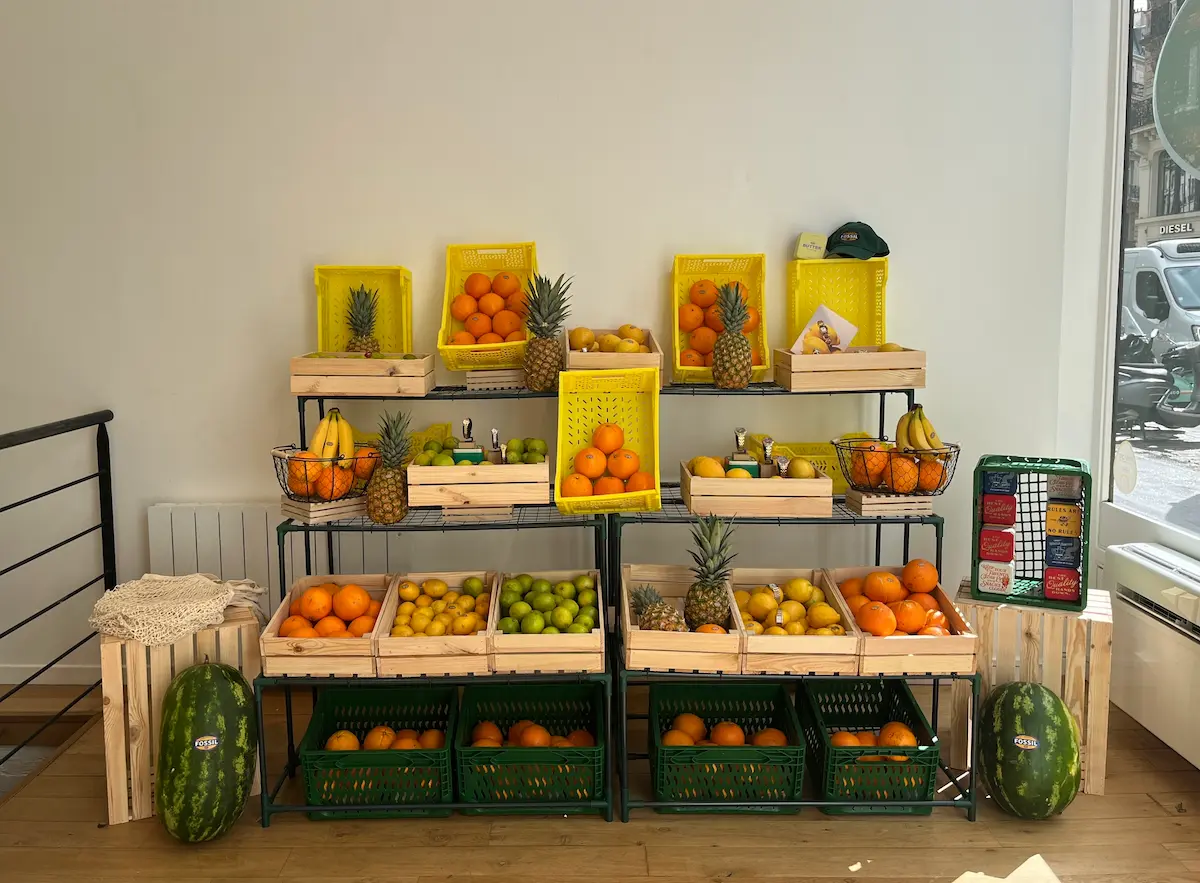
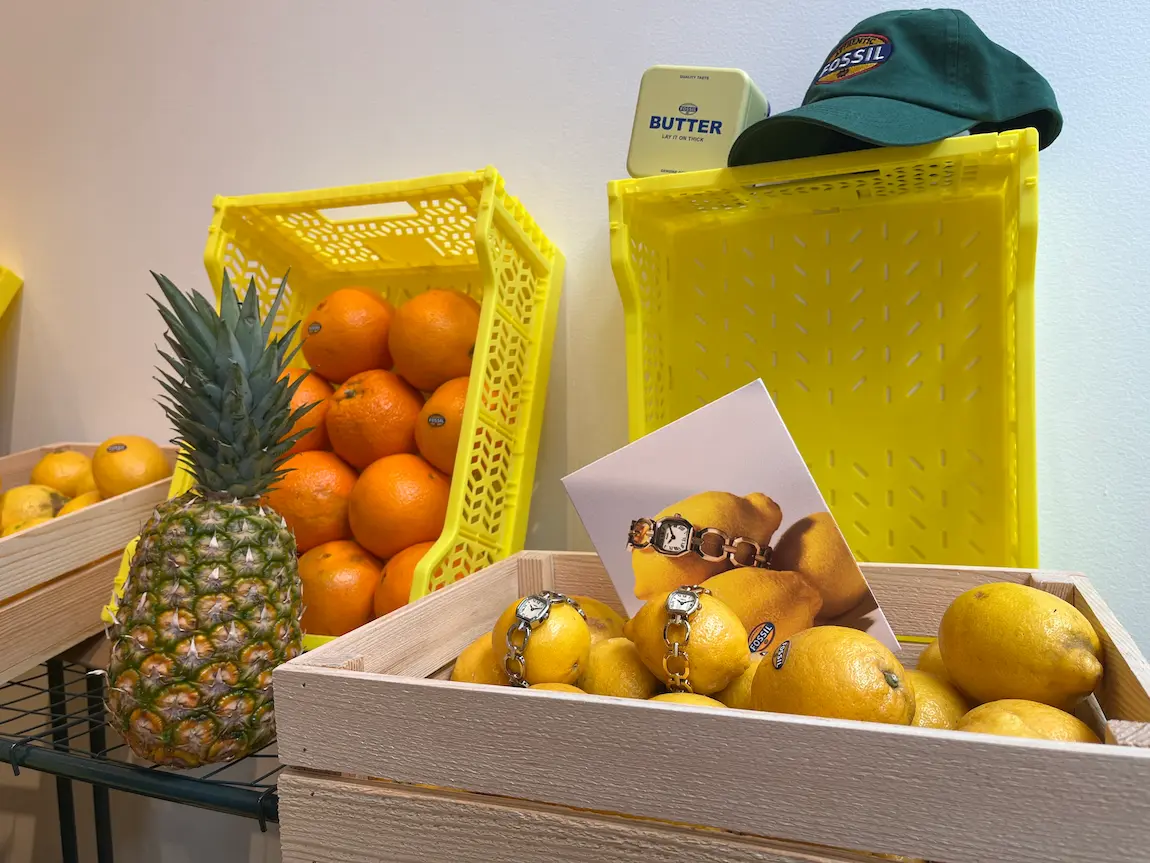
Fossil hosted a press activation at Nestore's boutique on 36 rue Étienne Marcel to launch its new watch collection. The concept: a fully staged market, with citrus fruits and pineapples, bold colours (orange, bright yellow), and Fossil-branded labels placed directly on the produce. The event brought together Parisian lifestyle influencers and specialist press. The result was a striking visual contrast — the watches stood out precisely because their environment was organic and unexpected.
What if your next brand activation felt like this? Nestore has spent 10 years helping brands build retail experiences that people actually remember.
Let's talk about your next ephemeral project.
Prada Beauty — The Spring Market
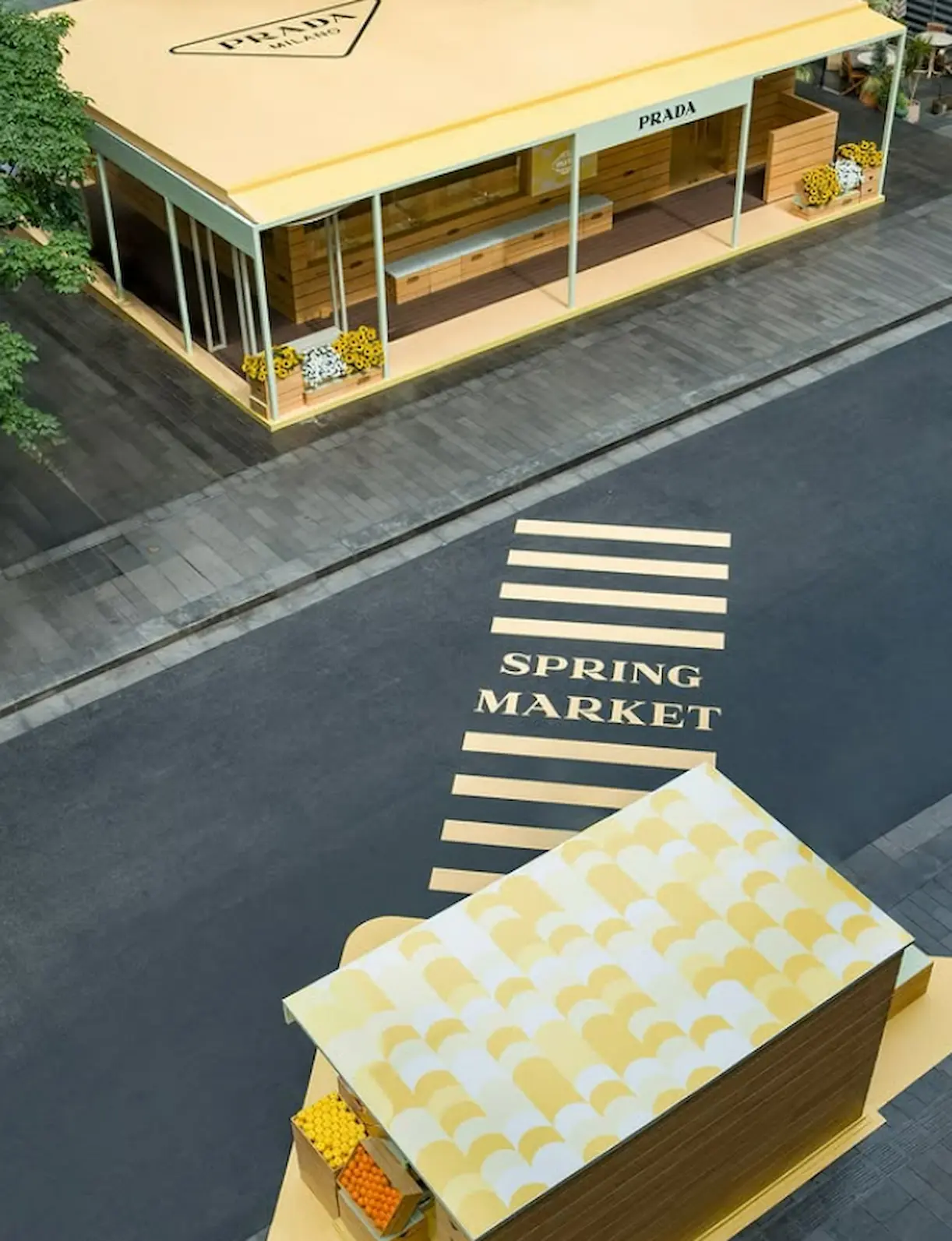
Prada staged an outdoor market-style pop-up for its Prada Beauty line: open-air stands under awnings, wooden crates, chalkboard pricing, fragrances displayed alongside fresh fruit arrangements. The dominant colour was yellow. The implicit message: true luxury lives in lightness and reclaimed time, not in opulence. The activation generated significant coverage across lifestyle and beauty media, both in print and on social platforms.
The Ordinary — Le Supermargé
Skincare brand The Ordinary took the concept further — and in a more provocative direction. Their ephemeral "supermargé" (a portmanteau of supermarché and marché) displayed fruits labelled with branded stickers at deliberately inflated prices, illustrating the markup mechanics that drive the cosmetics industry. Tagline: "Buy a product for its ingredients, not its hype." This was not a shop — it was a manifesto.
.webp)

Key takeaways of the brands projects
- Fossil used the market aesthetic to create visual contrast and highlight the product
- Prada used it to reposition luxury around simplicity
- The Ordinary used it as a tool for brand-led social commentary
- All three activations were designed as media events, not just sales opportunities
What Does the Market-Style Pop-Up Tell Us About the Future of Retail?
On the surface, these three activations have little in common — a Swiss watchmaker, an Italian luxury house, a Canadian accessible skincare brand. Yet they share the same strategic instinct: today's consumer doesn't just want to buy something in a space. They want to experience something.
The pop-up store has become the most effective tool to meet that expectation. Ephemeral by nature, it creates urgency. Sensory in its design, it leaves a lasting impression. And when it borrows the codes of the traditional market, it activates something deeply rooted — a desire for connection, slowness, and presence.
Key takeaways
- The market-style pop-up is a high-impact experiential format with strong media potential
- It works across very different product categories, provided the narrative is consistent
- Ephemerality amplifies impact: time scarcity increases the perceived value of the experience
- Brands that master this format are ahead of those still operating in standardised retail spaces
Conclusion
The market aesthetic in pop-up retail is not a passing trend. It is the visible expression of a deeper shift: consumers want shopping experiences that reflect their values, slow down the pace, and carry genuine meaning. Brands that have understood this — from Fossil to Prada to The Ordinary — have used the pop-up not just as a sales tool, but as a storytelling platform.
The question is no longer whether this format is relevant. It is whether your next activation is truly worth experiencing.
Nestore has been helping brands design and activate pop-up stores across Paris and France for over 10 years. Get in touch about your next project.
.webp)
.webp)