

Pop-up ice cream shops: brands' new summer obsession.
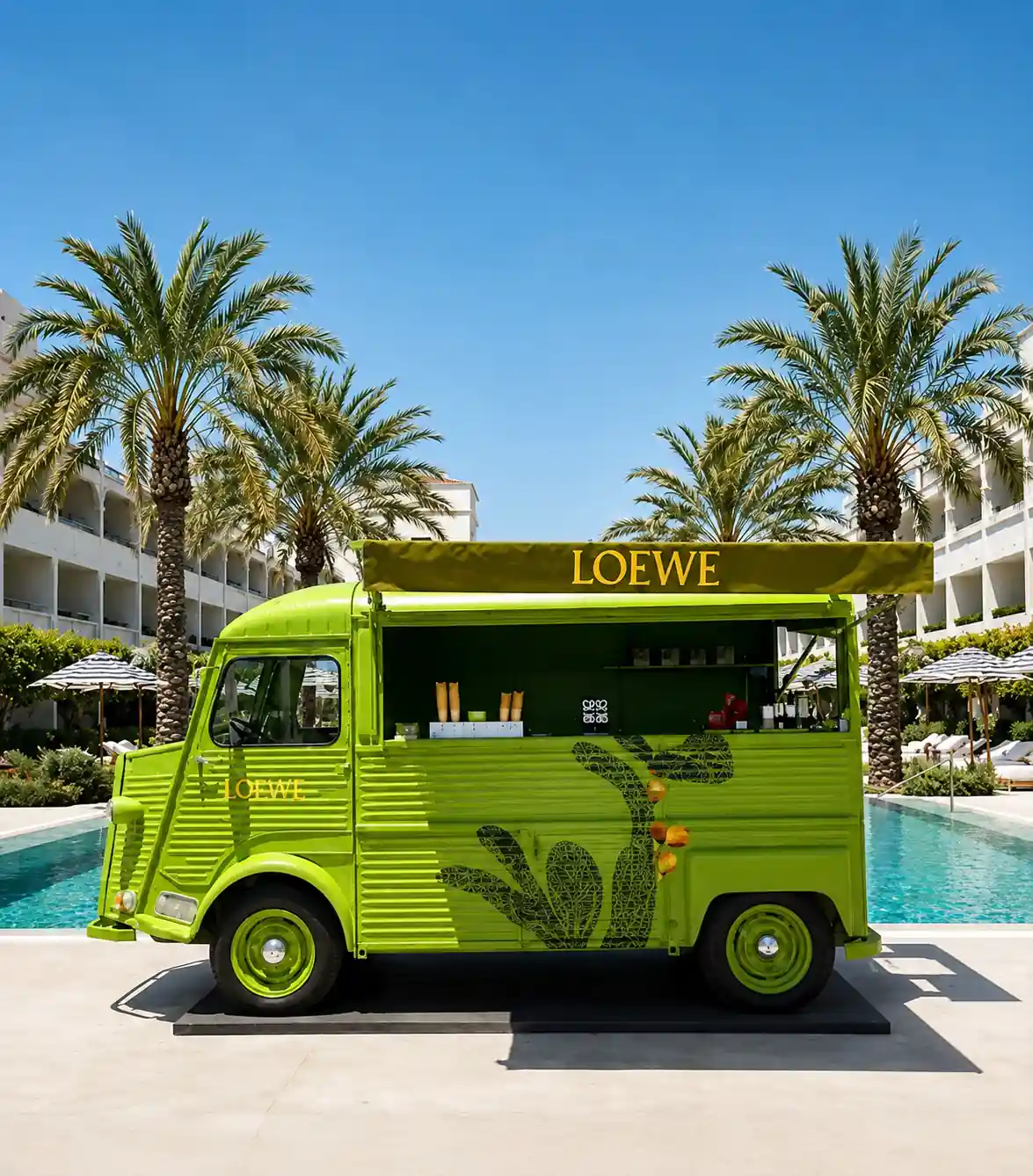
A pistachio-scented candle turned ice cream. A Parisian café cooling down Marseille's old port. An iced food truck parked outside a Marais boutique. This summer, you can't walk far in a major city without stumbling on a pop-up ice cream shop. Loewe, Bvlgari, Home Café, PHLUR, Birkenstock x Repetto: the same move, repeated across houses, each with its own twist.
This is no coincidence, and it's not just content built for social media. It's a deliberate retail play, solving a precise equation: how to draw people in, keep them there, and make them fall for a brand — through a concept that stands out in summer.
The strategy behind these pop-ups, decoded by Nestore.

A sensory experience that sparks emotion
A multisensory experience sticks in people's minds far longer than a passing glance at a product ever could. Unlike a bag or a coat sitting behind glass, ice cream gets tasted, smelled, seen, and touched — four senses a typical pop-up store rarely engages all at once. That sensory intensity sparks an emotion, and that emotion has a name: "affective transfer." Part of it carries over onto the brand that triggered it. Summer, holidays, childhood, sharing a moment — everything ice cream evokes ends up rubbing off on the brand serving it.

Customers who stay engaged, longer
Ice cream, by nature, slows the customer journey down: waiting in line, hesitating between two flavors, savoring it on the spot, capturing the moment. That time we assume is wasted is actually where engagement begins. And that engagement makes the purchase feel almost inevitable. The experience doesn't end once the ice cream's gone, either: the wait, the order, the photo, the share on social media, browsing the rest of what's in store. Every step is another chance to meet the brand — and each one deepens the relationship being built with the customer.
Word of mouth that spreads on its own
Cheap to make, effortlessly good-looking, easy to photograph: ice cream is Instagram-ready before it's even sold. Brands no longer need to produce their own content — their visitors do it for them, free of charge. All it takes is a concept with some originality or buzz, an atmosphere with a bit of personality, and word of mouth takes off on its own, no marketing budget required.
That's exactly what Home Café pulled off in our space at 6 La Canebière in Marseille. The brand opened a pop-up ice cream shop there in collaboration with Ravi for the ice cream and Cookiss for the cookies: a three-way concept worth checking out here.
.webp)
A branding play
It lets a brand feel approachable without feeling ordinary, all while staying true to who it really is. A scoop for two or three euros, next to a piece from the same house that can run into the hundreds or thousands, that gap is exactly what makes the whole thing work.
It draws in people who'd never have walked through the boutique door, creates a low-pressure first encounter, and builds desirability without ever touching the perceived value of the pricier pieces. It's the same logic luxury has long used to widen its audience without cheapening the offer. But the choice of flavor is never random — the ice cream tells a story of its own, the same way in-store merchandising does.
That's why the fragrance brand Phlur chose to wrap the storefront of our boutique at 36 rue Étienne Marcel, promoting the pop-up ice cream shop it opened for a June weekend in Paris's Palais Royal gardens. The timing was no accident either: the brand had just announced its arrival at Sephora in France.


A sense of FOMO that gets people moving and buying
An exclusive scent, a limited-run recipe, one-summer-only packaging, a gift you can't get anywhere else: the sheer temporariness of the offer creates urgency, that nagging fear of missing out, and it pushes the purchase decision along. And at a time when everything can be bought online, that urgency comes with a genuine reason to leave the house. The ice cream shop turns the store into a destination, on par with a pop-up restaurant or a live event. The pop-ups working best today aren't betting on product alone anymore — they're betting on experience: hospitality, event-craft, everything e-commerce, by definition, will never be able to replicate.
Conclusion
The pop-up ice cream shop, then, is no passing summer fad. It's a format that packs, into a simple and inexpensive gesture, everything a brand looks for in physical retail today: an experience people remember, content that creates itself, a positive emotion, and — at last — a good reason to walk through the door.
Building experiences that go beyond a store: that's what Nestore does.
.webp)