
Fashion Week Paris : which neighbourhood for your showroom?
Every year, Fashion Week shifts Paris into a different gear. More than a schedule of runway shows, it's the most intense professional gathering of the year. International buyers, creative directors, fashion editors, PR directors, influencers — all of them move through the city's arrondissements and streets in search of new brands and emerging trends.
In this context, opening a pop-up showroom is one of the most strategic decisions a brand can make. But it all starts with choosing the right neighbourhood — because in Paris, an address is never neutral. It sends a message, defines an audience, and determines footfall.
Each neighbourhood has its own character:
- Le Marais as the central hub
- Saint-Germain for refinement
- Palais-Royal for the luxury world
- Canal Saint-Martin for emerging and independent brands
- Montmartre for standing out
Each neighbourhood has its own logic, its own clientele, its own energy.
Nestore breaks down how to read Paris during Fashion Week — and how to choose between neighbourhoods to find the right location for your pop-up space.

Le Marais — The Fashion Week hub
This is the centre of gravity. During Fashion Week, Le Marais draws the highest concentration of showrooms, activations, and presentations in Paris. Its central location, strong public transport connections, and naturally dense foot traffic make it the default choice for brands that want to maximise visibility without building their audience from scratch.
But Le Marais is not a monolithic neighbourhood. It breaks down into several micro-areas, each with its own retail logic.
- Rue Vieille du Temple and its surrounding streets (rue Debelleyme, rue Commines, rue des Blancs Manteaux) form the beating heart of Parisian fashion, during Fashion Week and beyond. These streets generate a steady flow of qualified foot traffic that intensifies dramatically during Fashion Week.
Our space at 95 rue Vieille du Temple records 6,500 daily footfalls — a number that speaks for itself when it comes to what a storefront on this street means during Fashion Week. Spaces here tend to be more compact, ideal for intimate showrooms where experience takes precedence over floor area.
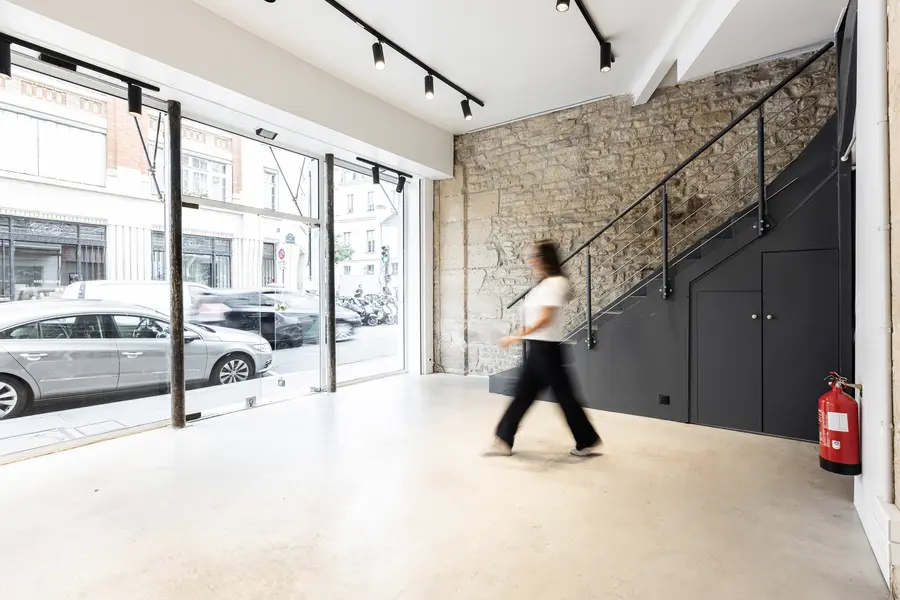
Rue des Francs-Bourgeois : where it meets Vieille du Temple, operates at a different scale. Larger floor plans make it the natural territory for established brands looking to give a new collection the space it deserves.
Rue de Turenne follows yet another logic: it's the street for event-driven retail. Launch cocktails, press evenings, private presentations — showrooms on Turenne don't rely on spontaneous footfall to fill their diaries. Visits are planned, built in advance. That requires active outreach before the doors even open.
One final advantage of Le Marais, and not a minor one: the clustering effect. With so many brands setting up in the same area, buyers naturally concentrate. A buyer moving between three showrooms within the same few blocks is a buyer who stays in the neighbourhood — and who might just walk through a fourth door: yours.
Saint-Germain-des-Prés — The refined choice
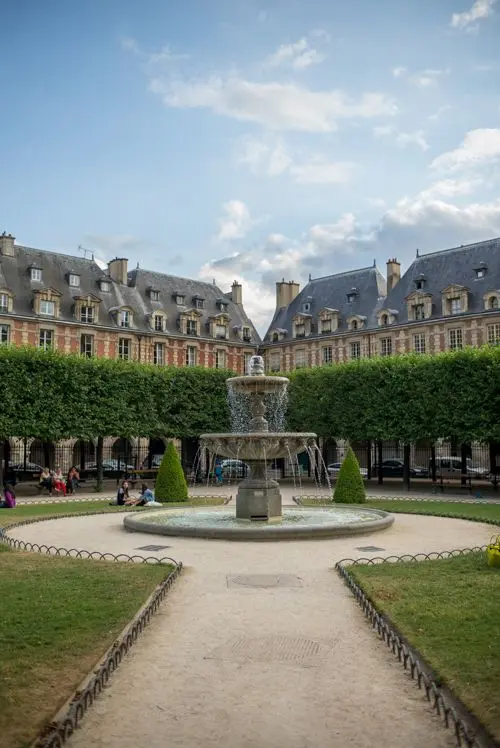
Saint-Germain-des-Prés is the Left Bank of Fashion Week — literally and figuratively. Quieter, more selective, with fewer ephemeral activations than Le Marais. That relative calm is precisely what makes it an opportunity: a brand that sets up here during Fashion Week immediately stands out in a landscape where everyone else is converging on the same arrondissements.
It's the best Left Bank neighbourhood for a Fashion Week showroom — provided your positioning fits. Saint-Germain naturally draws a high-end clientele: international buyers staying in nearby luxury hotels, senior figures from major fashion houses, specialist press.
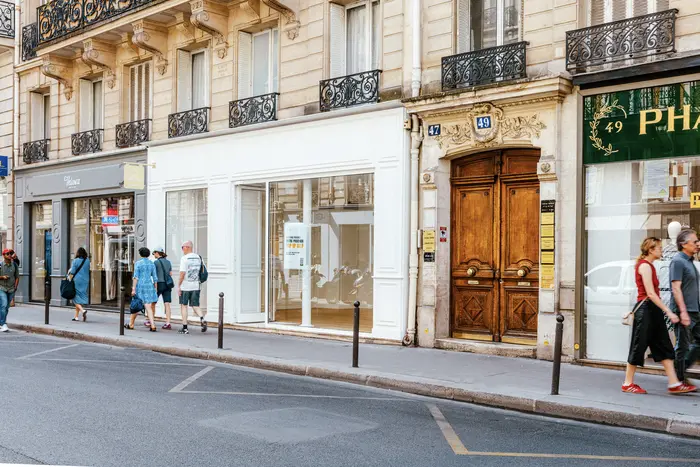
Our spaces at 47 rue du Four and 49 rue du Four embody this positioning well — addresses that let you receive guests in a setting that matches the discourse of a luxury or premium ready-to-wear brand, without the density of the Marais.
Le Palais-Royal — The luxury address
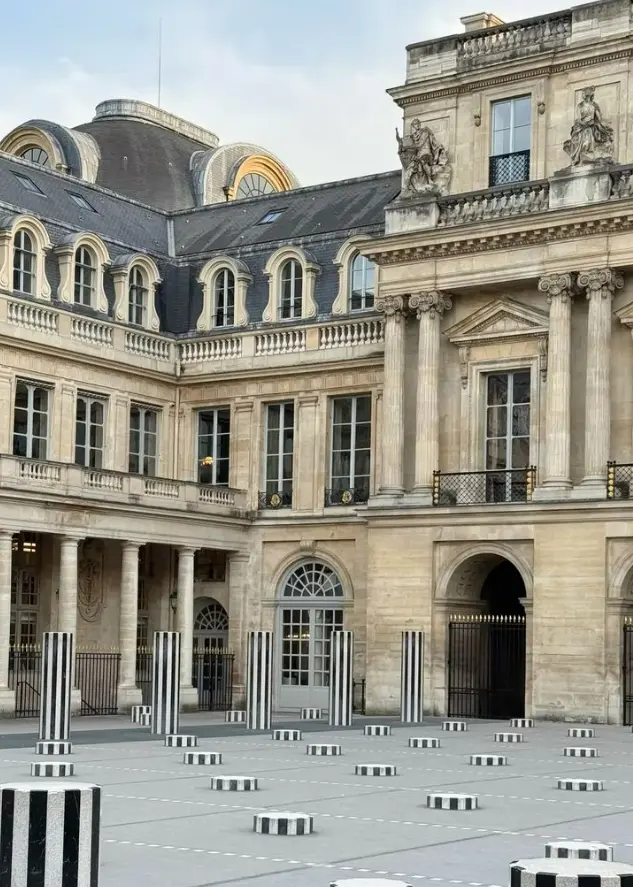
The Palais-Royal neighbourhood is not a footfall address, it's a status address. The arcades, the Tuileries gardens, the quintessentially Haussmannian architecture: everything communicates a sense of luxury, without ostentation. For a brand looking to anchor its showroom in an iconic Parisian setting, there are very few equivalents.
During Fashion Week, the area sees little saturation in fashion activations. That's both its limitation and its asset: no crowd effect, but heightened visibility for those who do show up. Qualified traffic — high-end tourists, fashion professionals crossing over from Le Marais — is naturally present, without requiring heavy communication investment to generate it.
The geographical proximity to Le Marais is also a practical argument: international buyers moving between the two neighbourhoods are only a few minutes apart, making it easy to integrate Palais-Royal into an already packed Fashion Week schedule.
For a brand operating in the luxury or premium segment, Palais-Royal offers something rare: an address that does the positioning work before the visitor even steps inside.
Canal Saint-Martin — The emerging brands' neighbourhood
Canal Saint-Martin doesn't appear on the traditional Fashion Week map — and that's exactly what makes it relevant for certain brands. This is the neighbourhood of independents, of confident creative directions, of labels that assert their identity without seeking validation from established circuits.
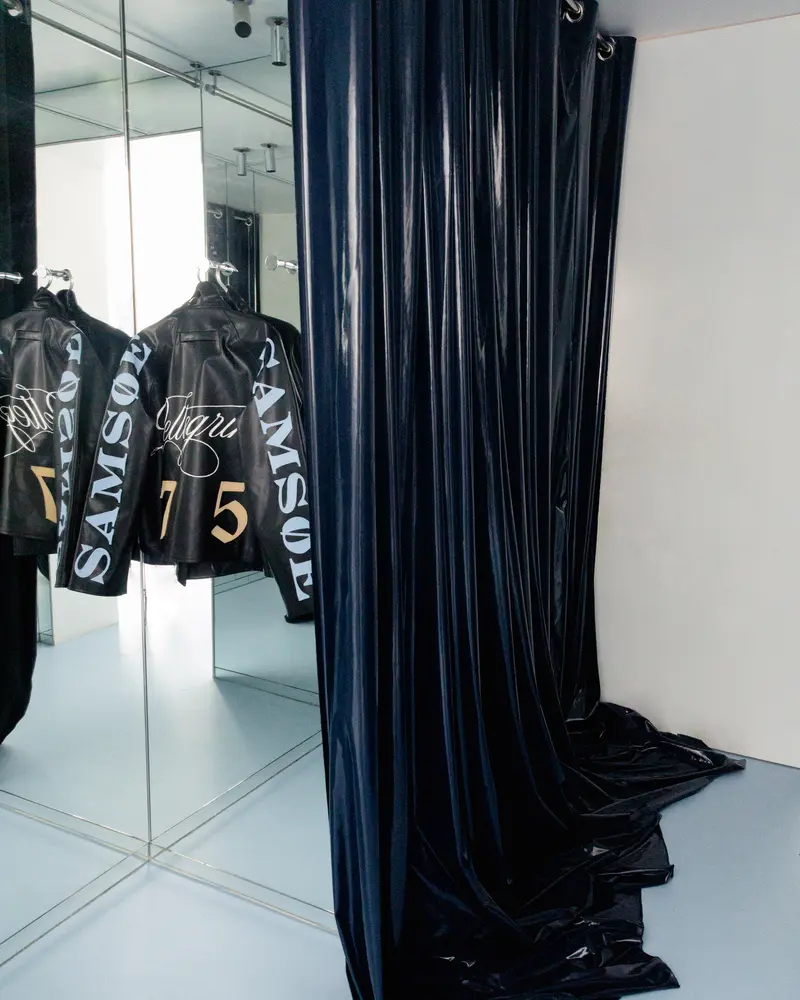
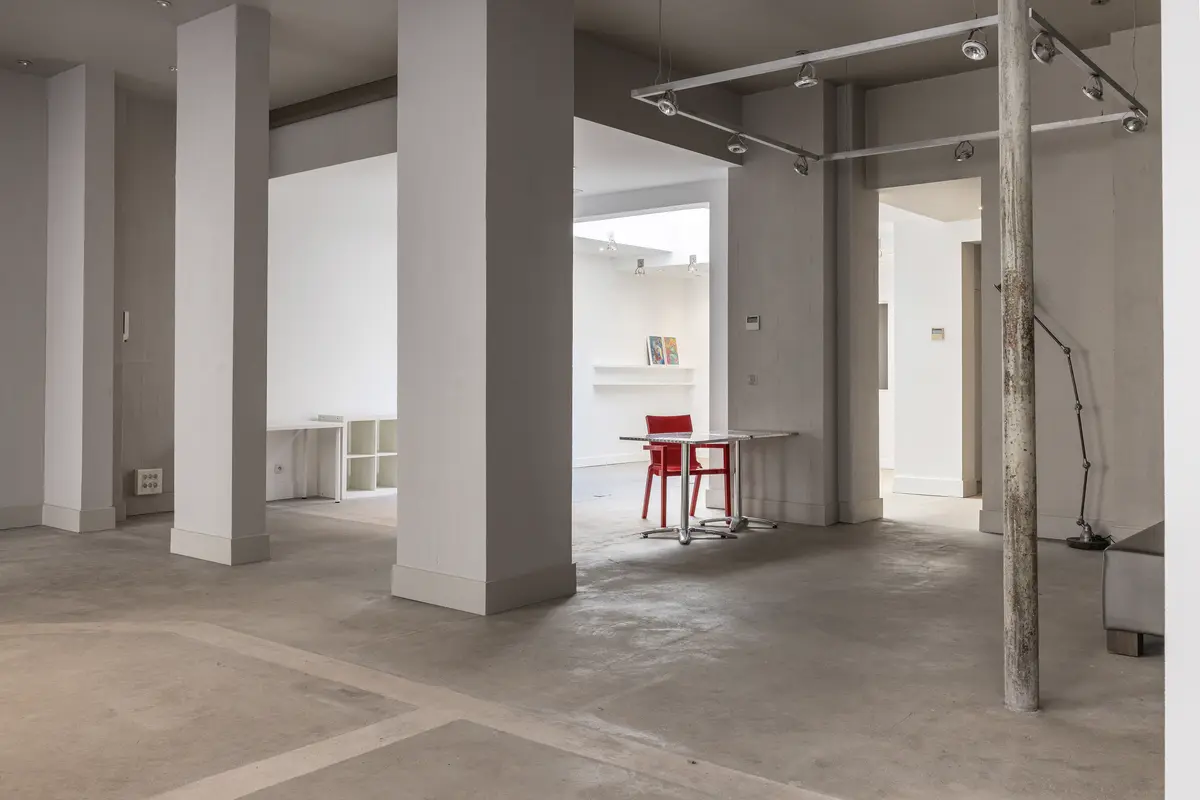
It's the bet that Basket Case made with our space at 6 rue Yves Toudic — using the location to communicate a brand identity that sits somewhere between gorpcore and grunge.
During Fashion Week, this area draws a very specific visitor profile: niche press, influencers with genuine fashion culture, buyers actively looking for the next new thing.
For an emerging brand with a strong artistic universe and an avant-garde streetwear positioning, Canal Saint-Martin offers a setting that's coherent with its story. Spaces here tend to be larger and more affordable than in the city centre, and competition for ephemeral showrooms remains low.
This neighbourhood is for brands that have something to say — and that speak to an audience who knows how to listen.
Montmartre — The quintessentially Parisian neighbourhood
Montmartre is a card to play with discernment. Its visual identity and narrative value for brands targeting an international clientele are real. Setting up a showroom in Montmartre means selling the idea of Paris that very few other addresses can deliver with the same intensity.
The neighbourhood sees very little Fashion Week activation, which guarantees geographical singularity in a packed professional diary. The Rue des Martyrs axis — more alive and less touristy than the area around Sacré-Cœur — concentrates what the neighbourhood does best.
.webp)
One thing to keep clearly in mind: Montmartre doesn't generate spontaneous professional traffic. Unlike Le Marais or Palais-Royal, buyers and press don't pass through by chance during Fashion Week. A showroom in Montmartre needs to mobilise its audience actively, with targeted invitations.
For brands that do the work, it's one of the most memorable addresses a Parisian Fashion Week can offer.
Choosing your neighbourhood is choosing your brand
There is no good or bad neighbourhood — only neighbourhoods that are coherent or incoherent with what a brand wants to say, to whom it wants to say it, and with what budget it operates. A showroom address is a positioning signal before it's a logistical question.
At Nestore, we help brands open their showrooms — not just to find an available space, but to find the right location in terms of footfall, clientele, and fit with their universe.
Because during Fashion Week, every detail counts. And the address is usually the first.
Your next Fashion Week showroom starts with the right address — let's find it together.